


- Ranked No.1 in the New Energy category of Korea’s Most Admired Companies survey for the second consecutive year
- Recognized for expanding low-carbon businesses and contributing to energy transition and carbon reduction
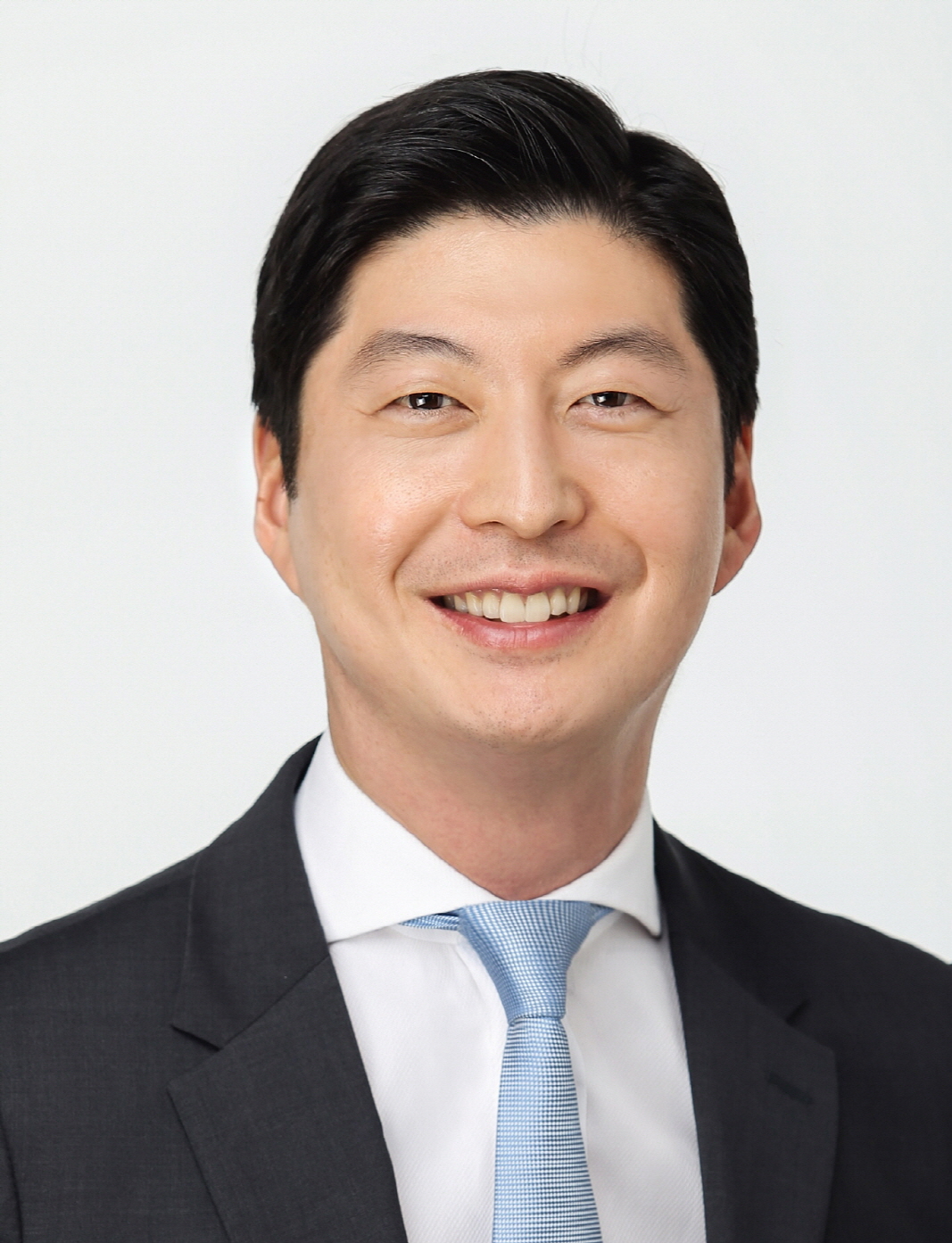
GS Caltex (Board Chair & CEO, GS Caltex / Vice Chairman, GS Group, Saehong Hur) was named the No.1 company in the New Energy category of Korea’s Most Admired Companies survey conducted by Korea Management Association Consulting (KMAC).
The survey evaluates companies across key values essential to earning public trust, including innovation capability, shareholder value, employee value, customer value, social value, and corporate image, to determine the highest-rated company in each industry. Launched in 2004, the annual survey marks its 23rd edition this year.
The New Energy category was first introduced the previous year to reflect the major global trends reshaping the industry. GS Caltex earned the top ranking for the second time on the strength of its proactive efforts to expand low-carbon businesses and address the energy transition and carbon reduction.
CEO Saehong Hur said, “The transition to low-carbon industries in response to climate change is one of the greatest challenges facing our industry,” adding, “GS Caltex will continue to steadily expand its new low-carbon businesses, while building on a foundation of sustainable and profitable growth, to take a leap toward becoming a respected, 100-year company.”
To date, GS Caltex has been expanding its new low-carbon businesses, encompassing hydrogen, carbon capture and storage (CCS), waste plastic recycling, carbon-free steam and renewable energy, and biofuels, based on the stable growth of its core refining and petrochemical businesses.
First, GS Caltex is building a business value chain to supply clean hydrogen. In 2023, it signed a memorandum of understanding with Korea South-East Power to establish a clean hydrogen value chain in the Yeosu Industrial Complex. The site was secured in 2024 through a land purchase agreement with the Yeosu Gwangyang Port Authority at the Yulchon Convergence Logistics Complex, allowing the company to move forward with the full-scale development of the project.
GS Caltex is also developing a carbon capture and storage (CCS) business as a means of reducing emissions. Following memoranda of understanding with industry partners in 2022, the company formed a joint council with key companies in the Yeosu Industrial Complex in 2024 and is working with local governments to advance public-private cooperation for the development of the Yeosu CCUS Cluster.
As part of efforts to build a circular economy, GS Caltex is expanding its chemical recycling (CR) and mechanical recycling (MR) businesses for waste plastics. In particular, it successfully completed a demonstration project in 2021 that yielded circular products by using pyrolysis oil generated through CR technology as feedstock in its refining and petrochemical processes. 2024 then saw the beginning of production and sales of a range of circular products using pyrolysis oil.
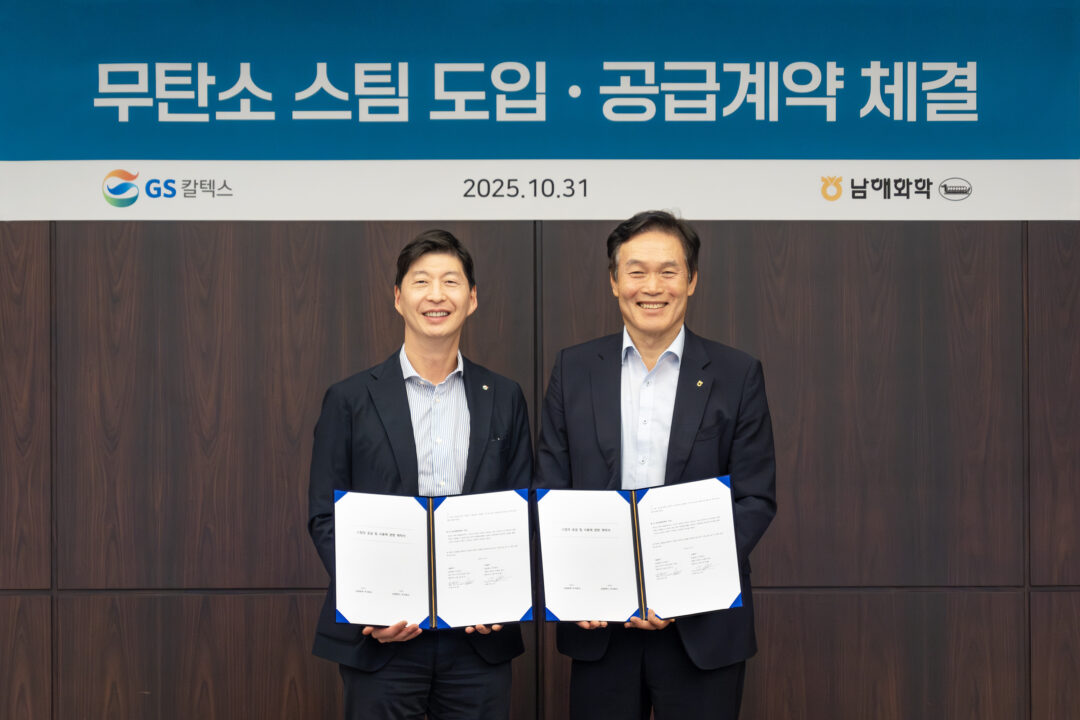
From left: GS Caltex CEO Saehong Hur; Namhae Chemical President Changsoo Kim
GS Caltex is further expanding its emissions reduction efforts by introducing carbon-free energy sources. The company signed an agreement with Namhae Chemical in 2025 for the introduction and supply of carbon-free steam and has invested in building new facilities. From 2027, GS Caltex’s Yeosu Complex will adopt carbon-free steam produced by utilizing Namhae Chemical’s idle sulfuric acid plant to replace steam currently generated from LNG. In addition, the company signed a power purchase agreement (PPA) to directly procure renewable electricity generated from a 120 MW solar power plant in Dangjin, Chungcheongnam-do, and has been using this power at its Yeosu Complex since February 2026.
In response to global fuel market conditions, GS Caltex is also expanding its investments in biofuels, including sustainable aviation fuel (SAF), bio-marine fuel, and biodiesel. In particular, the company sourced SAF from Neste of Finland, the world’s largest biofuel producer, and for the first time in Korea, completed a total of six SAF refueling operations and demonstration flights in partnership with Korean Air. Subsequently, GS Caltex produced CORSIA (Carbon Offsetting and Reduction Scheme for International Aviation) SAF by blending Neste’s Neat SAF (100% SAF) with conventional jet fuel, which was then exported to Narita Airport, Japan, through Itochu Corporation in September 2024. In addition, GS Caltex has been supplying internationally certified SAF, including CORSIA SAF produced through co-processing, to domestic airlines since December 2024.